 Indian Industry Plus A Pratisrutiplus Suppliment





India today stands on the edge of the moment as consequential as independence or liberalisation. It has a unique growth engine in a slowing global economy, a nation with the demographic and industrial heft to become a superpower.
When the whole world is looking forward to augment the renewable energy and vying for other energy option, India is not lagging behind. Till now the source of renewable energy mostly point out to solar, wind and hydropower. The momentum was high. The Net Zero Target for India has been fixed to 2070 in the Scotland summit. India was doubling down its renewable energy and is marching ahead to achieve the Net Zero Target by 2030 instead of 2070. Perhaps the most ambitious challenge of the decade. At the heart of this goal, among other climate related initiatives was 500GW of renewable energy by 2030, with half of India’s installed capacity being green by the same period. During last four years India has achieved 50 percent of its installed capacity from non-fossil fuel (renewable plus nuclear plus hydro) sources by mid-2025, five years ahead of its original target of 2030. Although the country has expanded the renewable energy capacity nearly threefold from 2014 to 2025 but the rapid growth is mainly driven by solar and wind energy, with India becoming the third largest solar power capacity holder world-wide. Because the grid integrates more renewables, their intermittent nature has exposed limitations. The sun does not sign at night, and wind does not blow consistently. This is where the Government considered reintroducing nuclear energy into the conversation as a zero carbon, base load energy source that can anchor India’s energy security over the next three decades.
The debacle at Iberian in peninsular Spain, mainland Portugal and parts of France, power failed abruptly which has stunned the world last year. Trains stopped; hospitals leaned on emergency systems and commuters found themselves waiting for the power supply to return. The event was exceptional not only for its magnitude but for its lesion that even relatively tiny, modern grids can reveal vulnerabilities that are not obvious until they snap. This is a matter of great concern for the whole world and India has taken it as a challenge to move further. The technocrats and bureaucrats are naturally worried for a Vikasita Bharat. If Spain and Portugal, with their advanced electric markets, could be pushed to the edge, what would happen in a country where demand grows by the year and where outages can become political crisis? In case of wind and solar which depends on weather, it becomes harder to keep the grid stable especially when the weather and power demand does not match forecasts. This does not mean renewables are bad: it simply means they change the way electricity flows in and out of the grid, making it more sensitive to sudden changes.
Over the last decade the country has spread solar firms and erected windmills across many of its regions. The effort has been dramatic. By early 2026 non- fossil sources accounted for roughly half of India’s installed electricity capacity, a milestone reached earlier than many planners expected. Simultaneously, the bulk of electric generation still comes from coal based thermal plants, which supply the steady, predictable power that growing industries and cities require. Those two facts sit uneasily together. Solar and wind may be wonderful for cutting emissions, but they do not produce power on demand. To keep the lights on, the grid needs reliable power sources that can step in when the weather does not co-operate. That is why regulators and system planners have begun to talk openly about a parallel path.
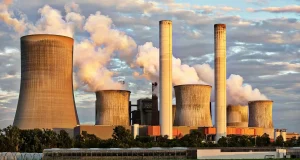
For uninterrupted and reliable power supply, it is essential to have a non-thermal source of energy, and nuclear energy offers a good mix. But it is not the first time India toyed with the idea of nuclear energy. From 2008 the journey has begun. Today, India’s nuclear fleet contributes just 8. 8 GW to the grid, around 3 percent of country’s total power capacity. This is a modest return on decades of investment and ambition stretching back to father of India’s nuclear programme, Homi Bhabha’s vision for a three-stage programme. Large nuclear power plants are notorious worldwide for delay and cost overruns, and India has been no exception. Under India’s three stage nuclear power programme the first stage-pressurised heavy water reactors-uses natural uranium as fuel and heavy water as both moderator and coolant. These reactors have worked but not scaled.
The second stage based on first breeder reactors that use plutonium to generate more fuel than they consume, has been delayed for decades. Fuel shortages have also meant that many reactors often run below capacity. But in all of this, there has been a silver lining. Because the reactors have to complete by indigenous technology, our technological skill has excelled over years. It is against this backdrop Narendra Modi led government has sought to revive India’s nuclear mission. His government has set an audacious target of 100GW of nuclear capacity as part of its Viksit Bharat vision, to be achieved by mid-century. More importantly, nearly a third of this, officials say, could come from small modular reactors (SMR)- compact factory-built designs that promise shorter construction times but no proven records. As of today, no SMR has been deployed commercially at scale anywhere in the world. Indian scientists however pointed out that the country’s 220MW PHWR reactor qualifies as a small reactor-typically defined as those under 300MW -though it is not modular in the strict sense. Modular reactors are considered more advanced, as they are easier to operate and maintain compared to conventional designs. India however, like many countries, is convinced of its potential. Unlike mega- projects that sprawl across acres of land, these smaller reactors will be placed closer to demand centres.
But the weight of history is undeniable. India has spent nearly 60 years to build just 8 GW of nuclear capacity. Now it aims to add more than 12 times that amount in less than 25 years. Only time alone can tell it whether the country is ready for such a sprint that involves a commercially untested technology. The UK trade agreement in mid-2025 promised new market for exporters. For a country like India whose industrial exports remain largely carbon-intensive, the implications could be immediate. Growth and competitiveness abroad have already begun to feel inseparable from the urgency of clean, reliable power. The government’s approach to nuclear, under the current legal framework, therefore reflects this urgency. India plans to gradually transition from the Bharat Small Reactors (BSR) to the more modular Bharat Small Modular Reactors (BSMR) designs in phases, rather than leap straight to the ideal plug and play. SMRs currently popularised by the west. both the projects are progressing in parallel in India. To bridge the gap, the Nuclear Power Corporation of India (NPCIL) has floated a request for proposal inviting companies to invest capital in BSR projects without holding ownership stakes. In return, these firms will be entitled to use the electricity generated for their own operation, an arrangement that effectively opens new model of public-private collaboration in nuclear energy. According to the recent settlement of NPCIL, the private participants will provide land, cooling water and capital, while NPCIL will retain control over design, quality assurance and operations. For India Inc. however, the proposition is overwhelming as of now. Scientists show more promise in the BSR project than the much-touted BSMR project.
The logic of going Desi is very simple. While new reactors require years of testing and validation the BSR could be scaled today, making it not just an immediate tool for industrial decarbonisation, but also a long-term strategy to give India leverage in strong nuclear plants in collaboration with BARC, the premier atomic institute of India. Amidst the much-awaited fuel fear, Tata power and Adani power have the capacity to overcome this debacle. They have done it in the past and have a very committed and dedicated approach. L&T and state owned NTPC is there to back them up. For India at present, the stakes are far higher with nuclear fuel. 100GW of nuclear plant will need roughly 18000 tons of mined uranium annually, about a third of the worlds current output. Expansion to this scale cannot rely solely on imports and foreign resources.
Odisha is rich in ores and minerals out of which much has to be explored yet. The Hon. Chief minister of Odisha has recently stressed more on installing alternative source of renewable energy and states that the State is rich in Monazite, a source of nuclear reactor in the sands of the sea shore of the vast sea belt of Odisha, and this has to be exploited meaningfully to augment the nuclear energy power of the state. Competition is intensifying as other states are also in the verge of expanding their nuclear energy. Nuclear fuel is expected to attract greater geo-political attention. Bhabha’s vision for India’s three stage nuclear programme focused precisely on this-energy autonomy. Although, this is a fact that thorium alone cannot sustain a reactor. Instead, it is combined with a small amount of uranium to produce Uranium-233, a fuel capable of running future reactors.
The most important fact in installing nuclear power plants is public acceptance. This plays a crucial role for the future. Whatever raw materials we have, or however technologically sound our Research & Development wing is, but the role of public and human activities cannot be ignored. Public acceptance will determine whether nuclear power can expand meaningfully in the state and the country. Even, a disaster in another country, like Chernobyl or Fukushima can enormously affect our domestic sentiments. In domestic front the issue of Kodamkulam, Tamil Nadu is a glaring example of facing the fire. The other side of the coin is that when a nuclear power plant functions normally, it is a disaster in itself. It emits radiation which contaminates water, land and air. Small reactors, in that case, are being promoted as a possible way forward. Compact, and theoretically safer, they are being envisioned as a bridge between technological ambition and social acceptance. Even state-run giants like NTPC, planning to enter the nuclear business face uncharted territory. Although India has never suffered a major nuclear reactor accident, yet the memory of Bhopal gas tragedy of December 1984, caused by private sector negligence, remains deeply etched in public consciousness.
The stakes for India’s nuclear mission have now become existential. The Government has realised that, if the country fails to scale nuclear energy in the next three decades, the consequences will extend far beyond electricity shortages. Industries already stretched by volatile fuel prices will find themselves cornered, unable to compete with nations that have secured reliable and clean baseload power. Dependence on coal would not be tolerated by a world tightening its climate rules; renewables, while crucial, cannot by themselves sustain the relentless pace of growth India seeks. Without nuclear energy forming a strong backbone, the dual pressures of growth and clean power could strain India’s economy in ways far harsher than anything seen so far.
For decades, the West has sought to script the destinies of emerging economies, be it through embargoes, technology denials or the leverage of resource control. That pressure will only intensify as the race for clean energy sharpens. India today stands on the edge of the moment as consequential as independence or liberalisation. It has a unique growth engine in a slowing global economy, a nation with the demographic and industrial heft to become a superpower. But that promise will hold only if it secures the backbone of sovereign energy. Nuclear power is no longer just one option among many; it is the hinge on which industries future strength may turn.