 Indian Industry Plus A Pratisrutiplus Suppliment





States like Kerala, Madhya Pradesh and Odisha have pioneered unique programmes. Kerala’s responsible tourism, Madha Pradesh’s rural tourism policy and Odisha’s eco-retreat programme emphasize sustainability and local participation
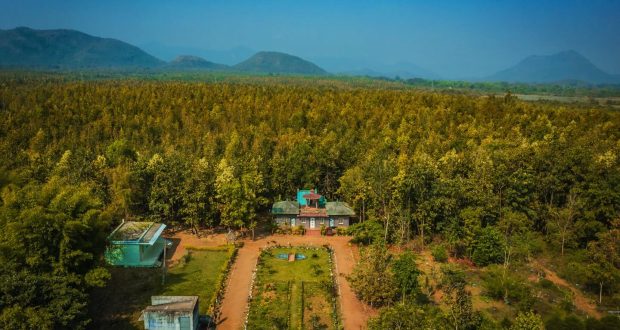
Ecotourism in Odisha focuses on community managed sustainable nature tourism in forest areas; offering stays in nature camps, safaris, trekking and boating,leveraging destinations like Similipal, Daringbadi, Debrigarh and Ansupa lake to support local livelihoods, conserve biodiversity and provide immersive experiences in diverse landscape from mangroves to hills.The 4 Cs of ecotourism are conservation, community, culture and commence focusing on protecting environments, empowering locals, respecting heritage and building local economies ensuring tourism benefits for both people and planet sustainable.
Odisha a land of opportunities and possibilities promotes sustainable tourism,integrating conservation with community benefits, transforming forest areas into models for ecofriendly tourism. Ecotourism or “community managed nature tourism in Odisha” aims to support forest and wild life conservation by providing alternative livelihood to forest dependent communities in the state. It is all about uniting conservation, communities and sustainable travel. Odisha is a heaven of biodiversity,home to adventures national parks, wild life sanctuaries and ecotourism hubs. Its rich variety of flora and fauna can be admired in places like sprawling protected areas and mangrove ecosystems. Odisha Forest Development Corporation (OFDC) plays a vital role in fascinating the rural tourism (popularly known as ecotourism and nature camps in Odisha) thus augmenting the economic status of the rural people in a systematic manner.
The Govt. of India has recognized that rural tourism can be a powerful driver of inclusive growth. Several national and state level initiatives have been launched to strengthen this sector. National initiatives such as National Strategy for ecotourism, Swadesh Darshan 2.0 and PRASHAD have been instrumental in developing eco circuits, sustainable infrastructure and capacity building through hospitality institutions. In recent years, India has witnessed a transformation in how tourism is perceived and practiced. Travelers increasingly seek authentic experiences that minimize environmental footprints, empower local communities and preserve natural habitats. At the same time policy makers and State Govt. have recognized ecotourism’s potential to drive rural development and conservations. The rise of ecotourism in India has been shaped by deliberate policy interventions and institutional support.
Odisha is the land of framed forests, mountains valleys, waterfalls, gorges, soaring peaks with stunning wild life in their own natural habitats. The important wild life in state are tigers, elephants, hyena, leopards, spotted dears, wild bear, giant squirrel, crocodiles, jungle cats, hornbills and many migratory birds etc. A total of 110 species of reptiles including three crocodile species, 20 species of amphibians, 479 species of birds, 86 species of mammals have been recorded so far in the state, for nature lover tourists looking forward to experience with landscapes in a sustainable way from camping to eco-resorts, from trekking to bird viewing, from sightseeing to boating. Odisha offers something for everyone and the only thing surpasses the beauty of the state; is the experience of being explored. Odisha has a growing network of ecotourism spots, with around 47 to 50 nature camps and destinations actively merged by the local communities, offering night stays, day trips, jungle safari viewing, trekking and boating with plans to expand to sixty locations. These sites focus on providing alternative livelihoods for forest dependent communities with significant revenue re-invested locally making Odisha a leader in community based ecotourism in India. The ecotourism in Odisha is basically community focused where more than 600 locals are employed in managing their destinations with 50% of revenue going back to the community. Out of the 62 destination points Bhitarkanika, Satkosia, Debrigarh, Similipal, Deomali,Chitrakonda and Satiguda are profit making destinations along with most of the spots are running in breakeven point. Lack of adequate promotion and advertisement is the cardinal reason behind the poor tourist occupancy rate in most of the destinations.The existing nature of ecotourism has not only given back to the guardians of the state’s wild life hotspots but has also successfully combated the evils of poaching and resulted in conservation in a larger scale. These determined efforts deservedly won the state’s inspirational community managed nature tourism programme “the best ecotourism initiative” award by FICCI in 2019.
The ecotourism in Odisha can be attributed as a part of the vibrant villages programme (VVP), the ambitious project launched by Govt. of India which aims at the holistic development of border villages with a focus on tourism driver growth. It strengthens infrastructure, connectivity and livelihood opportunities while promoting eco and cultural tourism through common participation. The initiative enhances local migration by creating sustainable jobs. India’s heart beats in its villages from the colorful crafts of Kutch to the tea gardens of Assam and the tranquil backwaters along with sanctuaries of Odisha, rural India holds an incredible variety of landscapes, traditions and lifestyles. For decades, these regions remained away from the tourist spotlight, but today rural and ecotourism is emerging as a powerful force for the sustainable development and cultural revival. State level initiatives are also playing a significant role in encouraging tourism activities in villages. States like Kerala, Madhya Pradesh and Odisha have pioneered unique programmes. Kerala’s responsible tourism, Madhya Pradesh’s rural tourism policy and Odisha’s eco-retreat programme emphasize sustainability and local participation. Investment in eco-friendly facilities, digital literacy and skill development can unlock rural India’s full tourism potential.
In Odisha the ecotourism destinations rest laid amidst lush greenery, dense forests, rich in flora and fauna and natural atmosphere from city noise. The cozy cottages designed to blend with nature and activities like cycling, archery, karaoke, born fire along with explore the jungle safari provides a serene ambience. Despite of these facilities the system lacks aggressive promotion and proper eco-friendly SOP. Recently the Forest Department of Odisha has stressed more on developing the ecotourism centers of Odisha. The Department has signed an MoU with IITTM (Indian Institute of Tourism & Travel Management), Bhubaneswar during the inauguration event of the 6t h National Chilika Bird Festival. The MoU stressed that IITTM will devise framework for planning, implementation, monitoring and periodic review of eco-tourism initiatives in a delicate manner in which conservation priorities remain paramount. The institute will co-ordinate with the state wild life wing and eco-tourism society to prepare a long term plan.
During the Vikasita Odisha the 10-year plan to be prepared as “Vision Document 2036” will guide the state in planning, development and marketing of ecotourism products in the state in a sustainable and ethical manner. The eco-tourism society, the wild life wing and IITTM will also work out a five-year term strategic plan and a three-year short term plan for promotion of eco-tourism in the state. The joint venture also includes carrying capacity study and development of standard assessment criteria (SAC) for evaluation of eco-tourism sites. IITTM will prepare a standard operating procedure (SoP) for ecotourism management, visitors safety, first-aid, risk management and service delivery in consultation with the eco-tourism society. It will also develop a training schedule for the members of the community management eco-tourism projects, eco guides and nature lovers and organize seminar and workshop for tour operators, travel agents, destination management and other stake holders at different eco-tourism spots. During the next two years the IITTM will impart training to at least 2500 members of different eco-tourism projects nature camps. In this endeavor the state will be benefited more to develop new eco-tourism spots and nature camps particularly in dense forest and in other ambience. IITTM will as emphasize more on developing short term and long term plans which will definitely help in effective promotion. In the meantime, the state will prioritize in developing a proper eco-tourism policy for its promotion and development. Needless to mention here that some private operators are proving their excellency in development of nature parks and destination management. It is evident that policies and programmes intend to promote rural tourism through a multi-pronged approach, given that results are far-reaching and have efficacious spillovers on the rest of the economy. The recent economic survey along with Artificial Intelligence recommends that public policy should focus more on rural skill development in rural tourism sector. Rural eco-tourism areas have a huge potential to attract tourists. An integrated approach for identifying and developing them, to make them easily accessible, can tap that potential effectively and efficiently and enhance their contribution in designing “Viksit Bharat”.