 Indian Industry Plus A Pratisrutiplus Suppliment






Indian space-tech startups are now launching proprietary satellites and building launch vehicles. In agriculture, agritech startups are deploying drones, IoT sensors, and AI-driven supply chain logistics to maximize crop yields and stabilize income for millions of farmers.
The Indian startup ecosystem stands as one of the most dynamic and rapidly growing economic engines in the world, currently ranking as the third-largest globally, behind only the United States and China. Over the past decade, this ecosystem has undergone a massive transformation, evolving from a nascent
community of tech entrepreneurs into a mature, multi-billion-dollar network of innovation, investment, and employment. Driven by a massive domestic market, widespread digital adoption, a large pool of technical talent, and supportive government frameworks, Indian startups are no longer just copying Western business models but are actively creating hyper-local solutions with global scalability.
Data from the Department for Promotion of Industry and Internal Trade (DPIIT) highlights the sheer velocity of this growth. From just a few hundred startups in 2016, India now boasts over 140,000 officially recognized startups. This explosive growth is anchored by a formidable cohort of unicorns—companies valued at 1 billion dollars or more. India is home to over 110 unicorns, with a combined valuation crossing the 350-billion-dollar threshold. While the legendary ‘funding winter’ of recent years brought a necessary period of correction, forcing companies to pivot from growth-at-all-costs to sustainable profitability, capital inflows have stabilized, shifting toward mature, revenue-generating enterprises and early-stage deep-tech innovations. Several structural pillars support this sprawling ecosystem. The foremost catalyst is India’s unparalleled digital public infrastructure, known globally as the India Stack.
The Unified Payments Interface (UPI) revolutionized digital transactions, enabling even the smallest street vendors to participate in the formal economy and providing startups with a frictionless payment layer. Alongside UPI, the Open Network for Digital Commerce (ONDC) is actively breaking monopolies in e-commerce and food delivery, allowing small businesses and new startups to compete on an even playing field. This digital foundation is reinforced by incredibly low mobile data costs and a smartphone user base that exceeds 800 million people, creating an instantly accessible mass market for digital services.
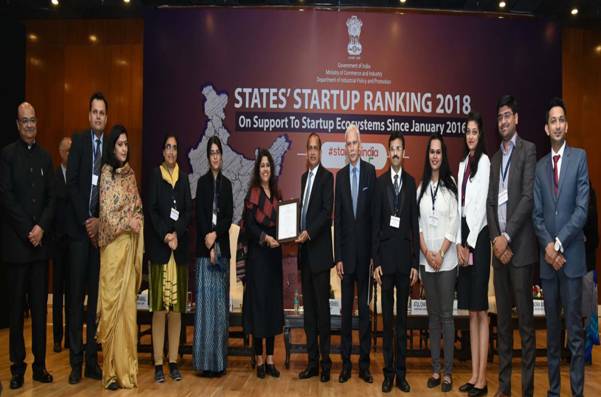
Government policy has played an equally vital role in institutionalizing this growth. The Startup India initiative, launched a decade ago, introduced critical interventions such as tax holidays, simplified compliance procedures, and the Fund of Funds for Startups (FFS), which injects capital into alternative investment funds. Furthermore, the government’s focus on regional development has successfully decentralized the ecosystem. While traditional hubs like Bengaluru, Delhi-NCR, and Mumbai continue to command the lion’s share of funding and talent, more than 45 percent of recognized startups now emerge from Tier-2 and Tier-3 cities like Jaipur, Ahmedabad, Indore, and Kochi. This shifting geography is democratizing entrepreneurship, tapping into regional problem-solving, and creating localized employment opportunities. Sectoral trends within the ecosystem have also shifted dramatically. Fintech remains a dominant force, accounting for a massive chunk of total funding as startups expand beyond basic digital wallets into insurchain, micro-lending, and neo-banking.
Simultaneously, Enterprise Tech and Software-as-a-Service (SaaS) have emerged as global leaders, leveraging India’s vast software engineering talent to build cost- effective, world-class products for international markets. However, the most significant recent evolution is the rise of Deep Tech, Artificial Intelligence, and space technology. Following the privatization of the space sector, Indian space-tech startups are now launching proprietary satellites and building launch vehicles. In agriculture, agritech startups are deploying drones, IoT sensors, and AI-driven supply chain logistics to maximize crop yields and stabilize income for millions of farmers.
The socio-economic impact of this entrepreneurial surge is profound, particularly regarding job creation. Startups in India have directly generated more than 1.3 million formal jobs, with millions more created indirectly in gig economies, logistics, and supply chains. Moreover, the ecosystem is witnessing a gradual but steady rise in diversity. Over 48 percent of recognized startups have at least a woman director, signalling a progressive shift in corporate leadership and inclusive growth. Despite these landmark achievements, the ecosystem faces complex structural headwinds. The recent global macroeconomic slowdown exposed vulnerabilities, leading to high-profile corporate governance failures, mass layoffs, and downward valuation corrections among several late-stage companies. Investors have significantly tightened their due diligence, moving away from vanity metrics like Gross Merchandise Value (GMV) to demand clear paths to profitability and robust unit economics. Additionally, while early-stage funding remains healthy, Indian startups still rely heavily on foreign institutional capital for massive growth-stage rounds. Cultivating a stronger domestic pool of capital, through domestic pension funds, insurance companies, and high-net-worth individuals, remains a critical milestone for long-term sustainability. Regulatory adaptation is another continuous hurdle. As startups pioneer cutting-edge fields like crypto-assets, quick-commerce, and generative AI, regulatory bodies are tasked with balancing consumer protection and data privacy without stifling rapid innovation. Navigating complex tax structures, such as past ambiguities surrounding the Angel Tax, has historically caused friction, though ongoing policy adjustments continue to address these cardinal points.
Looking toward the future, the Indian startup ecosystem is entering a phase of maturity characterized by high-quality initial public offerings (IPOs) and a deeper focus on sustainable technologies. An increasing number of domestic startups are opting to list on Indian stock exchanges rather than seeking foreign listings, a testament to the growing appetite and depth of the domestic retail and institutional investor market. The next frontier of growth is firmly anchored in sustainability, with electric vehicles (EVs), green hydrogen, clean energy storage, and circular economy startups drawing immense capital and talent. As Indian entrepreneurs continue to
solve some of the world’s most complex challenges at a fraction of the cost, the ecosystem is well-positioned to transition from a regional success story into a primary engine of global technological innovation.