 Indian Industry Plus A Pratisrutiplus Suppliment






Everybody can survive in start-up market as long as one does it with patience and perseverance. The next phase of Odisha’s start-up journey then is unlikely to be louder. But it will be sturdier. As founders trade adrenaline for architecture, the ecosystem is beginning to resemble what it long aspired to be, economically relevant, institutionally credible and built to last.
As the START-UP eco system initiative completes a decade, it is tempting to measure progress through headlines alone. There is no shortage of them. India is today the world’s third largest start-up ecosystem, home to a wide spectrum of new-age enterprises spanning consumer platforms, enterprise software, financial services, logistics, climate solutions and deep technology.
What began in 2016 as a signal of intent has, over ten years evolved into a system supported by policy continuity, digital public infrastructure and growing institutional confidence in entrepreneurship as a legitimate economic engine. Yet the most important story lies beneath the aggregates. The past decade has witnessed cycles of exuberance and correction, of easy capital followed by enforced discipline. Those cycles have been formative. They have pushed durability. They have forced investors to recalibrate expectations and sharpen selectivity. And they have brought start-ups into closure alignment with public markets, regulators and long-term capital. Heading into 2026, India’s founders are increasingly cognizant of capital efficiency, governance and problem-first innovation.
While ambition remains aligned with India’s 2047 vision, this generation is building businesses that are way more globally competitive. The era when IPOs dominate headlines and funding cycles oscillate between caution and confidence, India’s start-up conversation has quietly but decisively changed, India’s entrepreneurial class is evolving across sectors as diverse as consumer commerce, agritech, education, fintech and more. Founders are recalibrating ambition with discipline, growth with governance and capital with conviction. As India looks ahead the narrative shift from momentum to maturity. The ambition now is not merely to create more start-ups but to build large, India born enterprises that can endure, compete globally and anchor value chains at home.
The cover line ambition of a trillion-dollar start-up economy by 2031 reflects this transition from scale as an outcome, to scale as an instrument of national growth. The next phase will be defined by deeper technology, stronger balance sheets, credible paths to profitability and leadership that is comfortable operating under scrutiny. In that sense, the story of India’s start-up economy is not approaching peak; it is entering its most consequential chapter.
Odisha, located along the Bay of Bengal, is renowned for its rich blend of cultural diversity and natural beauty. The government of Odisha has been actively advancing its start-up ecosystem by creating necessary physical infrastructure to support start-ups, promoting the culture of innovation through academic interventions and institutionalising the culture of entrepreneurship by providing the training for the requisite skills. The objective of Odisha start-up policy 2016 has been to develop a world class start-up hub in Odisha by 2026, to encourage incubators including sector specific ones aligning with the states strength and requirements, create an enabling environment and supporting ecosystem that facilitates at least 5000 start-ups in the state and take steps to provide skill-based training to encourage youth to take up start-ups.
As of early 2026, the start-up ecosystem in Odisha is experiencing rapid growth, transitioning from an emerging hub to a recognised player in India’s start-up landscape. Under the Start-Up Odisha initiative, the state has built a robust framework aimed at fostering innovation, particularly in agri-tech, IT, artificial intelligence and healthcare. In the start-up recognition process, Odisha has supported over 1800 to 2600+ recognised start-ups. The state features over 25+ incubators with O-HUB in Bhubaneswar serving as the flagship incubator featuring a four lakh square feet facility. The stress in demographic inclusivity reflects a significant percentage of women entrepreneurs leading from the front. The state government provides the necessary impetus by forming a “FUNDS-OF-FUNDS” Model with a corpus of 100 crores dedicated to capital investment. Likewise, a plethora of relative start-up friendly policies has been implemented by the state government to develop a conducive ambience for the growth and development of these sectors.
Recent start-up initiatives focus on accelerating innovation through financial incentives, mentorship and industrial collaboration, often highlighted in state reforms and policy documents. The problem and challenge faced by the start-ups especially faced in Odisha is multifarious. Many start-ups fail in the market to survive. While every start-up journey is unique, the pitfalls that take them down usually follow a certain pattern. Whether it’s running out of cash, scaling too quickly, or missing crucial market signals, these mistakes show up again and again. Start-ups are built on uncertainty. They launch new products into unfamiliar markets and rely on untested business models. There is rarely a clear path to revenue. That same uncertainty is often what kills them. There are few areas under bracket like challenges to meet demand and supply of services, product as well as employment and finally the capability of existing institutes, within Odisha is to be measured.
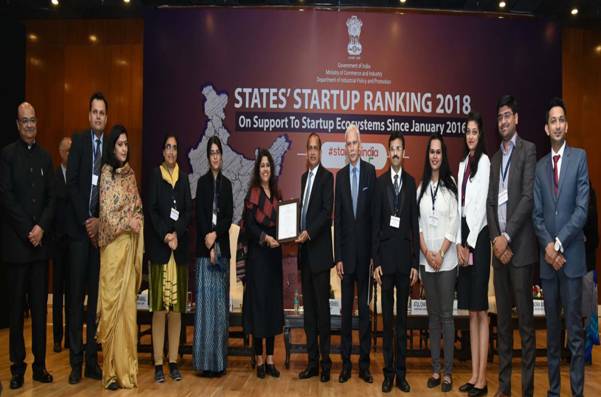
Surprisingly, most start-ups never follow the basic principle. One of the glaring examples is the 80-20 rule for the start-ups. This pattern is the pareto principle in action, commonly known as 80-20 rule. It reveals that roughly 80 percent of your results come from just 20 percent of your efforts, appearing consistently across customer revenue, product features, and team productivity. Despite government initiatives, challenges in market commercialisation, limited technical expertise, and a cultural preference for stable jobs over entrepreneurial risk contribute to high failure rates. Odisha has slipped to the aspiring leader category in the fifth edition of the state’s start-up ranking. The ranking undertaken by the Department of Promotion of Industry and Internal Trade had placed the state in this bracket. As per the latest ranking, Odisha spares space with Assam, Bihar, J&K, Sikkim, Tripura and Mizoram. In the list topped by Gujarat, there are three states among the best performers, five top performers and eleven in the leader category, all placed above Odisha’s aspiring leader segment. State officials attributed the downturn to a delay in submitting the requisite data to DPIIT, insisting that it does not reflect any substantive weakening of the start-up ecosystem.
The positive feedback by DPIIT is also very encouraging. It, however, acknowledged that Odisha has taken several initiatives, including the establishment of bilingual state start-up portal to improve accessibility, introduction of entrepreneurship policies for SC & ST communities, women and persons with disabilities, and financial and policy support for setting up new physical and virtual incubators. The crux of the matter lies in the fact that despite some of the leading institutes of the state are constantly thriving for knowledge economy, the survival and growth of the start-ups are not up to the desired expectation.
Some of the national and international institutes which provides feedback in marketing along with technical knowhow and quality control are IIT Bhubaneswar, IIM Sambalpur, IMMT Bhubaneswar etc. Perhaps the commercialisation of a product requires more in-depth research, market survey and adaptability before inception, which is the key factor of the budding problem. But the most overwhelming and encouraging part of the state start-up journey is that most of the women entrepreneurs shows their greed and committed temperament in these sectors and the current participation of their community is around forty percent. This is a win-win situation and has to be exploited by the state positively. Odisha is transitioning from a mineral-reliant economy to a diversified industrial and technological powerhouse, aiming for a $500 billion economy by 2036 and $ 1.5 trillion by 2047. Key pillars include becoming a global green energy hub, advancing in AI and semiconductors strengthening port-led manufacturing, and expanding digital infrastructure, aiming to become eastern India’s top industrial state. With these strategic initiatives, Odisha is positioning itself as a modern, prosperous start-up state and a key player in India’s growth story.
Beyond capital and capability, geography is reshaping. Entrepreneurship, education, healthcare and financial inclusion now extend beyond metros providing impetus to start-up journey in tier two and tier three cities. This inward focus is deliberate. The motto is that “Come on, Odisha; India is to back up” despite lot of problems. Everybody can survive in start-up market as long as one does it with patience and perseverance. The next phase of Odisha’s start-up journey then is unlikely to be louder. But it will be sturdier. As founders trade adrenaline for architecture, the ecosystem is beginning to resemble what it long aspired to be, economically relevant, institutionally credible and built to last.
The scenario in national context in 2026 and beyond is loud and clear. The next two to three years will test resilience. Capital discipline will remain tight. Public markets will reward performance, not promise. Geopolitical uncertainty will raise costs and compress margins. Only companies built with depth will endure. The next decade will test leadership. Whether India can convert scale into influence, innovation into advantage and entrepreneurship into nation- building infrastructure. The question is no longer whether India can build start-ups, it is whether it can build enterprises that allow them to last. India is no longer catching up. The nation is beginning to shape the future. Over recent years, the role of finance leaders has moved beyond reporting and control.
Volatility, tighter capital, rapid technological change, and rising expectations from boards, investors and regulators have elevated analysis, leadership and enterprise-wide decision making to the centre of the role. This convergence matters. A maturing startup ecosystem requires the same qualities now demanded of modern finance leadership discipline without conservatism, ambition anchored in execution, and governance that enables speed instead of constraining it.