 Indian Industry Plus A Pratisrutiplus Suppliment





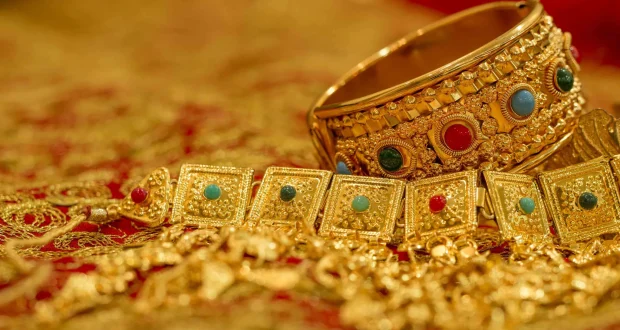
I was prompted to write on gold because of the growing public eagerness to purchase it, driven by recent geopolitical tensions in the Central East, where global uncertainties have influenced gold prices and created a sense of urgency among people. Gold has captivated human imagination for millennia, not only for its beauty and rarity but for the deeper layers of meaning it holds in culture, psychology, and spirituality. From the earliest civilizations to modern society, gold has symbolized wealth, security, immortality, and divine favor. In India, gold is inseparable from tradition: adorning temples, deities, and brides, marking auspicious events, and even being part of death rituals, it reflects a continuum of human reverence and societal values. Legends such as the Golden Lanka in the Ramayana exemplify its mythic and symbolic power, linking gold to divinity, prosperity, and aspiration.
The natural origins of gold lie deep within the Earth and in riverbeds. Gold forms over millions of years through complex geological processes. Most gold originates from hydrothermal activity, where superheated, mineral-rich fluids circulate through cracks and faults in rocks. As these fluids cool, gold precipitates and bonds with host minerals such as quartz and sulfides, including pyrite, arsenopyrite, and sometimes other metals like silver, copper, and tellurium, forming veins or lodes. Some gold forms in magmatic deposits, where molten rock crystallizes and traps tiny gold particles underground. Over geological time, erosion and sedimentation carry small amounts of gold to riverbeds, forming alluvial deposits often associated with dense minerals like magnetite, zircon, and ilmenite. While plant debris, soil, and water contribute trace amounts of gold to sediments, most commercially viable gold results from high-pressure, high-temperature underground processes rather than simple compression of organic matter.
Once concentrated in veins or alluvial deposits, gold is extracted through mining. In hard rock mining, ore is crushed and treated chemically, commonly using cyanidation or gravity separation, to recover pure gold. In alluvial mining, techniques like panning, sluicing, or dredging leverage gold’s density to separate it from sediments. Extracted gold is then refined to high purity (24 carats) or alloyed for jewelry and industrial use. Modern metallurgy also allows artificial gold production, though it lacks the intrinsic and cultural weight of natural gold.
Gold’s presence in human life extends far beyond material wealth. Medically, it has been used in Ayurveda for centuries and in modern medicine for treatments such as rheumatoid arthritis and cancer therapies. Surgical implants of gold are prized for their biocompatibility and resistance to corrosion. Psychologically, gold provides a sense of security and stability, calming the mind during uncertainty. Its cultural prominence—especially in temples and deities—demonstrates its spiritual significance. Vishnu is traditionally associated with divine radiance and prosperity, and Lakshmi embodies gold itself as a symbol of abundance.
Across India, this reverence takes magnificent physical form. In Odisha, Jagannath at Jagannath Temple is adorned with rich gold ornaments during important rituals, symbolizing divine majesty and protection. The regional tradition continues in the Raghunath Temple, where three sacred sunaa kallasis stand as enduring symbols of devotion and temple heritage.
In South India, temples present some of the most elaborate expressions of gold devotion. Among the most revered is Venkateswara, popularly known as Balaji Bhagawan, worshipped at the sacred Tirumala Venkateswara Temple. This temple stands as one of the richest centers of devotion in the world, where devotees offer immense quantities of gold as a mark of faith and surrender. The deity is adorned daily with elaborate gold ornaments and during special occasions appears almost fully gold-clad, symbolizing divine prosperity and protection. The tradition reflects a deep psychological belief that wealth, when offered to the divine, transforms into blessings and collective well-being.
The Padmanabhaswamy Temple, associated with Padmanabha, reflects immense temple wealth and centuries of gold offerings. Likewise, at the Meenakshi Temple, Meenakshi is adorned with gold ornaments during festivals, especially in processional forms.
In North India, the symbolism of gold is expressed through both ornamentation and architecture. The spire of the Kashi Vishwanath Temple dedicated to Shiva is gold-plated, representing divine radiance. At the Vaishno Devi Temple, Vaishno Devi is adorned with golden crowns and ornaments. The iconic Golden Temple, central to Sikhism, stands as a shining example of gold symbolizing purity and devotion at an architectural scale.
Gold is also intertwined with human behavior and desire. Folktales warn of greed: the story of a king who wished that everything he touched would turn into gold is a timeless cautionary tale. Initially a blessing, the boon became a curse, as he could neither eat nor embrace his loved ones. This reflects the psychological truth that excessive desire can lead to suffering. In society, especially in Indian and Odia contexts, gold represents both beauty and economic security, particularly for women, symbolizing dignity, status, and protection.
From a scientific standpoint, gold is the element Au (aurum) with atomic number 79. Its resistance to corrosion, malleability, and conductivity make it invaluable in medicine, electronics, and dentistry. These qualities ensure that gold remains relevant even in modern technological contexts.
Economically, gold remains deeply influenced by global dynamics. With rising oil prices, geopolitical tensions, and the Indian rupee weakening against the US dollar, gold prices have reached historically high levels while often appearing stable. This apparent stability reflects a deeper economic mechanism. Gold is globally priced in US dollars, so when the dollar strengthens, gold becomes more expensive for countries like India. At the same time, when the rupee depreciates, more rupees are required to purchase the same quantity of gold, creating a double impact.
In addition, geopolitical tensions in regions like the Central East push global investors toward gold as a safe haven asset, increasing demand and sustaining high prices. Rising oil prices further contribute to inflationary pressures, weakening currencies like the rupee and reinforcing the upward trend. Thus, gold becomes expensive not only because of its intrinsic value but also because of the changing value of money itself.
The gold business today includes jewelry, bullion, coins, and financial instruments such as Exchange Traded Funds (ETFs), digital gold, and Sovereign Gold Bonds issued by the Government of India. Gold bonds provide an alternative to physical gold by offering interest along with price appreciation, reducing storage concerns while maintaining investment value. Understanding purity and carats remains essential, with 24-carat gold suited for investment and lower carats for ornaments.
Gold plays a central role in festivals and rituals. Occasions like Dhanteras, Akhaya Tritiya, and Dhanvantari Jayanti are considered highly auspicious for purchasing gold, symbolizing prosperity, continuity, and health. It is used in weddings, childbirth ceremonies, and even in death rituals, reflecting its role across the entire human life cycle. Odia cultural sayings reinforce ethical dimensions: losing one’s gold is inauspicious, while gaining another’s lost gold is also unfavorable, teaching moral restraint and responsibility.
Philosophically, gold represents permanence in an impermanent world. It satisfies not only economic needs but also emotional and spiritual aspirations. Psychologically, it acts as a safeguard against uncertainty. Despite the existence of rarer metals, gold remains supreme due to its cultural depth, liquidity, and universal trust.
For buyers in the present scenario, caution and wisdom are essential. Investing in small, high-purity units, avoiding speculative risks, and diversifying between physical and financial gold are prudent strategies. Purchasing during auspicious occasions aligns both economic decisions and cultural satisfaction.
In conclusion, gold is far more than a metal. It is a bridge between science and spirituality, wealth and wisdom, tradition and modernity. From underground geological processes to temple sanctums, from human emotions to global markets, gold continues to shine as a symbol of enduring value and balanced living.