 Indian Industry Plus A Pratisrutiplus Suppliment






Critical and strategic minerals like lithium, cobalt, nickel, graphite, titanium, rare earth elements, vanadium, and tantalum—possess unique chemical and physical properties that make them indispensable for electric vehicles, renewable energy systems, semiconductors, telecommunications, aerospace, and defence applications.
The global transition toward clean energy, digital technologies, advanced manufacturing, and defence modernization has elevated critical and strategic minerals from niche commodities to essential pillars of economic and national security. Unlike traditional bulk minerals such as iron ore, coal, and bauxite, critical minerals—including lithium, cobalt, nickel, graphite, titanium, rare earth elements, vanadium, and tantalum—possess unique chemical and physical properties that make them indispensable for electric vehicles, renewable energy systems, semiconductors, telecommunications, aerospace, and defence applications. For India, which aims to become a global manufacturing hub while achieving technological self-reliance, securing reliable supplies of these minerals has become a strategic imperative. Within this national framework, Odisha occupies a pivotal position as both a mineral-rich state and an emerging centre for value-added processing.
Recognizing the risks associated with import dependence, the Government of India has fundamentally reshaped its mineral policy architecture. Studies conducted by the Ministry of Mines revealed that India depended heavily on imports for many minerals essential to modern industries. To address this vulnerability, the government identified a list of critical minerals and launched the National Critical Mineral Mission (NCMM), a comprehensive strategy aimed at strengthening domestic exploration, mining, processing, recycling, and international sourcing. The NCMM represents one of the most ambitious resource-security initiatives in India’s history. Covering the period from 2024–25 to 2030–31, the mission is backed by direct government funding of over ₹16,300 crore and is expected to attract an additional ₹18,000 crore in investments from public and private enterprises. The mission seeks to accelerate exploration, establish advanced processing facilities, improve beneficiation technologies, and promote large-scale recovery of strategic metals from industrial waste and end-of-life products.
A key objective is to complete more than 1,200 exploration projects and achieve sustainable domestic production of priority minerals such as lithium, graphite, potash, and rare earth elements. To ensure effective implementation, the government has established a high-level coordination mechanism involving ministries responsible for defence, renewable energy, electronics, science and technology, and external affairs. This whole-of-government approach integrates mineral security with broader industrial policies, including electric vehicle manufacturing, battery production, and semiconductor development. Supporting these efforts are major legislative reforms. Amendments to the Mines and Minerals (Development and Regulation) Act introduced a new category for critical minerals and centralized the auction process for several strategic resources. This has streamlined regulatory procedures, reduced uncertainty, and created a more attractive environment for domestic and international investors.
Another significant reform is the introduction of Exploration Licences, which encourage private companies to undertake mineral exploration using advanced geophysical and geochemical technologies. By providing financial incentives linked to future mining rights, India has created a commercial ecosystem that rewards mineral discovery and attracts risk capital into exploration activities. The economic implications of these reforms are substantial. Estimates suggest that India’s critical minerals market could exceed ₹1.2 lakh crore by 2030. When downstream manufacturing activities—such as battery materials, permanent magnets, advanced alloys, and semiconductor components—are included, the cumulative opportunity could surpass ₹2.5 lakh crore. Demand growth is being driven by India’s target of achieving 500 GW of non-fossil-fuel power generation and the rapid expansion of the electric vehicle sector, both of which require large quantities of critical minerals.
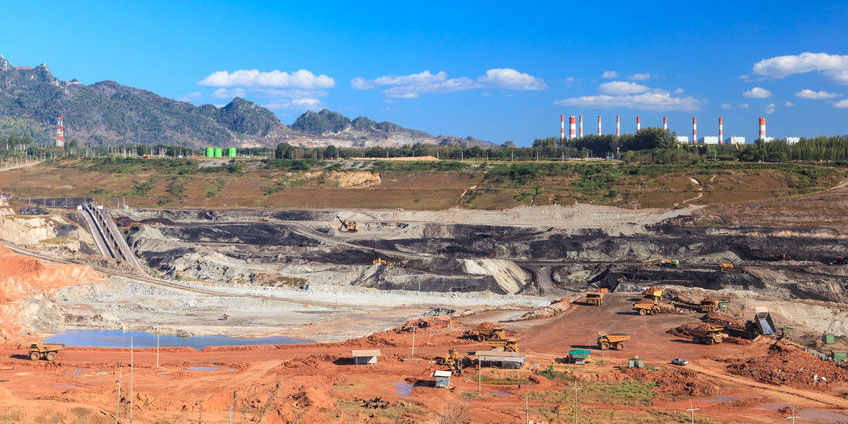
Within this national strategy, Odisha occupies a uniquely important position. Historically recognized for its vast reserves of iron ore, bauxite, and chromite, the state has long served as the backbone of India’s mining economy. The Odisha Mining Corporation (OMC) has emerged as one of the country’s most successful state-owned mining enterprises, generating revenues exceeding ₹25,000 crore in recent years. This strong financial base, combined with extensive infrastructure, ports, rail networks, and a skilled workforce, provides Odisha with significant advantages in expanding into the critical mineral sector.
Odisha’s effectiveness is reflected in its leadership under India’s mineral block auction framework. The state accounts for the largest number of operationalized auctioned mineral blocks in the country, demonstrating its administrative capability to convert policy initiatives into functioning industrial assets. Efficient environmental clearances, land management systems, and investment-friendly governance have made Odisha one of the most attractive mining destinations in India.
The state is now extending this expertise to strategic minerals. New auction programs include both traditional mineral blocks and specialized critical mineral assets spread across districts such as Keonjhar, Mayurbhanj, Sundargarh, Koraput, Rayagada, and Malkangiri. These initiatives are expected to support both immediate production and long-term exploration. Odisha’s geological diversity further strengthens its strategic significance. The state possesses extensive heavy mineral beach sand deposits containing ilmenite, rutile, zircon, and monazite. These minerals are critical sources of titanium and rare earth elements. At Chatrapur in Ganjam district, Indian Rare Earths Limited operates a major processing facility that extracts rare earth compounds such as neodymium, praseodymium, dysprosium, and samarium. These materials have enormous industrial value. Neodymium and dysprosium are essential for manufacturing permanent magnets used in electric vehicle motors and wind turbine generators. As India expands its renewable energy capacity, access to domestic rare earth resources becomes increasingly important. Similarly, titanium derived from Odisha’s mineral sands is vital for aerospace, defence, and marine engineering applications due to its exceptional strength-to-weight ratio and corrosion resistance.
Beyond coastal deposits, Odisha’s hard-rock geology offers significant potential for nickel, cobalt, copper, and platinum-group elements. These minerals are crucial components of modern battery technologies, particularly nickel-manganese-cobalt (NMC) batteries used in electric vehicles and energy storage systems. Geological surveys have identified promising mineralization zones in districts such as Mayurbhanj and Keonjhar, creating opportunities for future development.
An emerging area of strategic importance is the circular economy. Historically, mining and metallurgical industries generated vast quantities of waste, including red mud, slag, fly ash, and overburden material. Under the National Critical Mineral Mission, these waste streams are increasingly viewed as secondary resource reservoirs. Odisha, being a major centre for steel and aluminium production, possesses substantial quantities of industrial residues containing valuable minerals such as titanium, scandium, rare earths, and vanadium.
The commercial potential is considerable. Scandium enhances aluminium alloys used in aerospace applications, while vanadium is gaining importance as a key component of vanadium redox flow batteries for large-scale renewable energy storage. Public and private sector enterprises are partnering with research institutions to develop technologies that recover these minerals from industrial waste, transforming environmental liabilities into profitable business opportunities. Scientific innovation plays a central role in this transformation. The Council of Scientific and Industrial Research – Institute of Minerals and Materials Technology (CSIR-IMMT) in Bhubaneswar has been designated as a Centre of Excellence under the National Critical Mineral Mission. The institute is developing advanced technologies for rare earth separation, bio-leaching of low-grade ores, and recovery of strategic metals from waste streams. These innovations support India’s goal of creating indigenous intellectual property and reducing dependence on imported technologies.
India’s strategy also extends beyond domestic resources. Through Khanij Bidesh India Limited (KABIL), a joint venture involving major public-sector enterprises, the country is actively acquiring overseas mineral assets. Investments in lithium projects in Argentina and partnerships in Australia are helping to diversify supply chains and secure long-term access to critical minerals. These initiatives complement India’s participation in international frameworks such as the Mineral Security Partnership, strengthening resilience against geopolitical disruptions.
At the same time, the government is promoting domestic recycling. Dedicated incentives are supporting the development of facilities capable of recovering lithium, cobalt, nickel, and other valuable materials from electronic waste and spent batteries. Odisha, with its industrial infrastructure and port connectivity, is well positioned to become a major recycling hub within India’s emerging circular economy. Corporate strategies are evolving accordingly. Mining, steel, and aluminium companies are increasingly moving up the value chain into advanced materials and technology metals. Odisha’s industrial policies, including capital subsidies, infrastructure support, and streamlined approvals, are encouraging investments in downstream processing, semiconductor materials, battery components, and permanent magnet manufacturing.
The benefits extend beyond industrial growth. Mining revenues contribute significantly to District Mineral Foundations, which finance healthcare, education, skill development, and infrastructure projects in mining regions. These investments are helping to create a skilled local workforce capable of supporting sophisticated mineral processing and advanced manufacturing industries. Environmental sustainability is equally critical. Modern critical mineral projects require advanced water management, waste treatment, and environmental monitoring systems. Odisha has emphasized sustainable mining practices, including closed-loop water recycling, automated pollution control systems, and ecological restoration programs. Such measures are increasingly important for meeting global Environmental, Social, and Governance (ESG) standards and attracting international investment.
Geopolitically, critical minerals have become central to global competition. Concentrated control of mineral processing and refining capacities by a few countries has exposed vulnerabilities in international supply chains. India’s efforts to develop domestic capabilities, diversify international sourcing, and expand processing infrastructure are therefore as much about strategic autonomy as economic growth. In this context, Odisha’s mineral resources, industrial infrastructure, and administrative capacity make it a cornerstone of India’s resource-security strategy. The state is no longer merely a supplier of raw materials; it is emerging as a critical node in the production of high-value strategic materials and advanced manufacturing inputs. The partnership between the Government of India and Odisha represents a model of coordinated resource development. Through regulatory reform, targeted investment, scientific innovation, international engagement, and sustainable industrialization, India is constructing a resilient critical mineral ecosystem capable of supporting its clean energy transition, defence modernization, and manufacturing ambitions. As the global competition for critical minerals intensifies, Odisha’s geological wealth and industrial capabilities will remain central to India’s quest for economic sovereignty, technological leadership, and long-term strategic security.