 Indian Industry Plus A Pratisrutiplus Suppliment





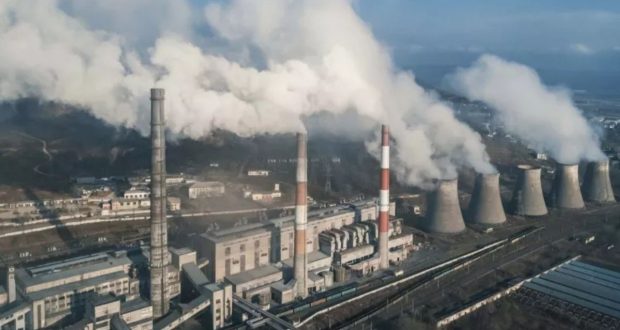
India has a five-point Action Plan called as “Panchamrita Strategy” which was announced at the COP26 summit in Glasgow and was meant to guide the nation’s green energy transition. This strategy comprises of five intervention areas.
India has a long-term promise to the world for becoming a greener nation with net-zero carbon emission by the year 2070, while achieving its economic growth as well as the environmental protection alongside. For a developing country like India, the goal is ambitious as well as challenging, while considering its commitment to meet economic challenges and to fulfil the needs for its growing energy requirement. India has a positive commitment to the world while considering the challenges faced on various world issues, such as climate change, rising temperatures, extreme weather events, air pollution and environmental degradation.
India has a five-point Action Plan called as “Panchamrita Strategy” which was announced at the COP26 summit in Glasgow and was meant to guide the nation’s green energy transition. This strategy comprises of five intervention areas such as, a) achieving 500 GW of non-fossil fuel energy, b) meeting 50% of energy requirements from renewables, c) reducing carbon emissions by 1 billion tonnes, 4) Reducing carbon intensity of GDP by 45% and 5) Achieving net-zero emissions by 2070. The strategy is heavily centred around three aspects: rapid expansion of clean energy, reduction of emissions and other sustainable development practices.
In order to reduce the consumption of non-fossil fuel energy, India has already taken some positive steps. The most visible action is seen in massive generation and utilisation of solar energy. India is now counted among one of the world leaders in solar power production. Large solar parks and wind energy projects installed in various states have started solar power production. Substantial subsidy is given to individual households to install solar panels which were connected to grid for appropriate distribution of electricity. Central government has eased few of the norms for consumers of rooftop solar systems under PM Surya Ghar to make the process easier and faster. This programme is picking up fast and the cumulative installed capacity of solar power production till last financial year is recorded as 157 GW.
Reducing carbon emissions from industries, vehicles and other sources is another important area for India as it plans to reduce carbon emissions by 1 billion tonnes by 2030. Several steps have been initiated such as use of alternate energy, enforcing stricter emission norms, creating sustainable and cleaner environment and monitoring system for air quality. Electric vehicles are gradually becoming popular and EV four-wheelers and buses are now plying on city roads apart from two wheelers. Charging infrastructure is expanded accordingly. More manufacturers are now sending newer models of EVs to market. Few companies like Maruti Suzuki have invested in setting up plants to manufacture new vehicle model which will run in compressed biogas with lesser carbon emission. To reduce carbon emissions, industries are seriously working on cleaner industrial processes, low-carbon technology and various energy efficient measures.
Providing cleaner fuel in cooking is another successful initiative in India for reducing carbon emission and improving quality of life. Programmes like ‘Ujala’ promoted use of cleaner LPG for cooking in urban as well as rural areas instead of traditional biomass like firewood. Several drives for tree plantation and conservation of forest is a major climate strategy as forests absorb carbon dioxide. Massive drives are being held through government, industry and non-government sector to provide cleaner fuels with lesser price and assured availability. Blending of ethanol with petrol is another initiative where permissible amount of ethanol is blended as per the norms of BIS and India has achieved the target of blending 20% ethanol with petrol. Government has recently exempted excise duty on such blending fuels to promote this initiative.
Citizens have greater role (both directly and indirectly) to play in reducing carbon emissions by cutting down on vehicle emissions, improving household energy use and generating public awareness towards preventive measures. They can either go for purchase of low emission vehicles and also reduce unnecessary use of vehicles running through fossil fuel. They should adopt blended fuels without hesitation. Citizens may try for public transport, carpooling and at times walk or ride bi-cycle. Citizens have a greater role in city plantation drive in their neighbourhood area. They should go for judicious use of electricity and advise others to do it. Burning waste and agricultural left outs are to be stopped completely by sensitising people. All above initiatives together can enable India to reach at zero carbon emission by 2070 as promised.