 Indian Industry Plus A Pratisrutiplus Suppliment





In the last five (5) years (i.e. from 2020-2025), by employing radiation-induced mutagenesis, DAE has developed and released a total of 23 varieties for cultivation by farmers. These include (a) 7 rice varieties, (b) 5 mustard varieties, (c) 3 black gram (urad) varieties, (d) 3 sorghum (jowar) varieties, (e) 2 groundnut varieties, (f) one mung bean variety, (g) one sesamum (til) variety and (h) one banana variety.
In the last five (5) years, a total 1680 quintals of breeder seeds of Trombay crop varieties, including groundnut, mungbean, rice and mustard varieties, were produced for distribution to seed corporations/companies and farmers for multiplication for cultivation by farmers.
The estimated quantity of seeds available to farmers for cultivation is around 18,05,300 quintals. These estimates are based on the expected multiplication ratios observed during production of foundation seeds from breeder seeds and subsequently, certified seeds from foundation seeds.
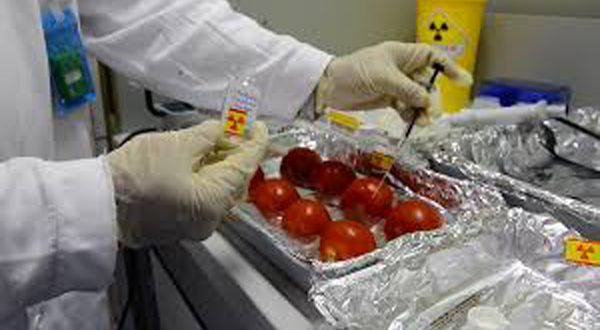
Radiation-based food-preservation technologies involving irradiation, and subsequent cold storage, developed by BARC are being employed for extending the shelf life of perishable agriculture produce, mitigate post-harvest and storage losses of agriculture produce. Irradiation of grains and spices eliminates insects and microbes and is a useful method of chemical free preservation. The technology is being deployed to facilitate;
-
- Export of agriculture produce such as mangoes, pomegranates to countries like United States of America (USA), Australia etc., through sea route in an economical manner.
- Shelf-life extension of spices, grains, vegetables, fruits, onions and potatoes.
-
- Shelf-life extension processed food products.
Forty-one (41) food irradiation and medical product sterilization facilities have already been commissioned in private/State Government sectors in the country and they are providing radiation processing services on demand basis.
DAE has been involved in the use of radiations and radioisotopes in agriculture through continuous R&D programmes. In field of nuclear agriculture, development and field trials of radiation induced improved crops are implemented in collaboration with various State Agricultural Universities, as well as research institutes under the Indian Council of Agricultural Research (ICAR).
BARC developed radiation technologies not only extend shelf life and prevent post harvesting losses, but also helps India meet international quarantine requirements for perishable commodities, enabling access to high-value markets. India has been exporting mangoes and pomegranate to the USA, Australia, South Africa and Malaysia using irradiation as a mandatory phytosanitary treatment. These measures strengthen export-oriented value chains and boost incomes of farmers and traders.
BARC is involved in developing comprehensive Standard Operating Protocols (SOPs) for the irradiation of agricultural produce to achieve shelf-life extension, reduction of post-harvest losses, and improvement in marketability.
Overall, the Government’s initiatives, including R&D collaborations, establishment of irradiation infrastructure, and promotion of export-oriented radiation processing, are helping to strengthen national food security, reduce wastage, improve farmer incomes, and enhance India’s competitiveness in global agri-trade.