 Indian Industry Plus A Pratisrutiplus Suppliment





There is a need for integrated approach to face the climate risk, rather than adopting an isolated approach. The uncertainty of extreme weather and environmental crisis become more frequent in recent years which need to be addressed through empowering farmer community to anticipate, adapt and recover for sustaining livelihood and food security.
“Holistic approach towards smart farming” speaks about gathering and integrating complete data from each part of agricultural operation like weather, soil health, inter-cultural operation, and machinery; to take well-balanced decisions for achieving more return in an eco-friendly manner. It looks upon entire eco-system, including the environment, crop cycles and economics, instead of focussing on just one single crop on the field. Technological tools like Internet of Things (IoT), sensors and artificial intelligence are used for taking prompt and accurate decisions on requirement of inputs (seed, water, fertiliser, energy), by linking with real time data. By this, farmers automate their tasks optimising their resources and produce more crops.
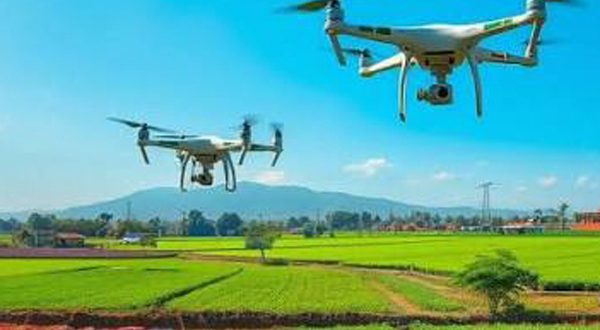
It is well known that Indian agriculture has multifaceted issues with multiple agro-climatic zones, relatively smaller land holdings, diverse cropping systems and climate risks like rainfall and temperature. Unlike traditional farming methods, smart farming emphasises precision, efficiency and sustainability. It uses technology to collect real time data and take appropriate work based on it. For example: Sensors check soil wetness, drones (flying cameras) and robots look for sick plants to treat, GPS software maps the location of tractor and directs it to plough or put water spray accordingly. Among key benefits of this system are use of less inputs, receiving higher output and protection of local ecosystem. Moreover, climate issue is no longer only an environmental issue, rather it is connected to other issues like food security and economic growth.
Our country is using “Digital Public Infrastructure” (DPI) for agri-climate assessment and accordingly take evidence-supported decisions in agricultural practices. Climate and geospatial intelligence have become indispensable for identifying climate vulnerability and its potential impact. Integration of artificial intelligence, open access data and geospatial analytics translates the information into actionable decisions. Another decision support system called “Data in Climate Resilient Agriculture (DiCRA) helps in policy making for investment and nationwide implementation through rural development programmes with National Bank for Agriculture and Rural Development (NABARD). In addition to only providing useful and actionable climate data, risk protection measures towards climate resilience also need to be in place. Apart from climate-based data system, farmers have another major issue of arranging finance from various sources like household finances and credit institutions, for translating climate information into practical action. Pradhan Mantri Fasal Bima Yojana (PMFBY) has become largest agricultural risk protection scheme of the country.
Holistic insights towards smart agriculture means to optimise improved technologies and innovations in agricultural operations and with climate-based data system to ensure productivity, healthy eco-system, and long-term sustainability. The success will be possible when farmers receive actionable advises to act on. In this regard, private participation is an important factor in taking the smart farming ahead. Manufacturers, established agribusiness and new-age tech companies are playing important role in this regard. Significant initiatives are also taken by them in this regard. Instead of traditional chemical fertilisers, farmers are now showing interest in adopting speciality fertilisers which is characterised with crop-specific, water soluble and higher effective products. According to manufacturers like Coromandel Fertilisers and Deepak Fertilisers, who started producing specialised fertilisers, crop nutrition is combined with soil enhancers and growth promoters to improve the nutritional uptake by the crop. Few companies also see the opportunity of expanding across products such as seaweed, gypsum and other micronutrient-based solutions. Unlike conventional products like urea, Di-ammonium Phosphate etc, speciality products are used in small quantities and are used in specific purposes like crop type, cropping stage and nutritional deficiency. Since the cost of speciality products are high, these are now being used in commercial farming like horticulture and tech-farming.
Hence, there is a need for integrated approach to face the climate risk, rather than adopting an isolated approach. The uncertainty of extreme weather and environmental crisis become more frequent in recent years which need to be addressed through empowering farmer community to anticipate, adapt and recover for sustaining livelihood and food security.