 Indian Industry Plus A Pratisrutiplus Suppliment





A novel way to distinguish between pollen from cultivated crops and from wild grasses enables scientists to unlock the story of India’s agricultural beginnings, particularly in the Central Ganga Plain. It offers a powerful window into how human societies shaped the landscape over millennia.
India is the second-largest producer of wheat and rice, the world’s major food staples. Establishing region-specific biometric thresholds for cereal and non-cereal grasses is essential for accurately identifying the cultivated and wild grass pollen, which could aid in reconstructing past human habitation and agricultural practices in India.
Most cereal crops such as wheat, rice, barley, and millets belong to the Poaceae (grass) family, whose pollen looks very similar to that of wild grasses. Under a microscope, telling them apart has long been difficult. As the pollen is preserved in sediments, its assemblage can reveal past agriculture, deforestation, and settlement during the Holocene (last 11,700 years).
Pollen micro-morphology, particularly overall grain size and annulus diameter (the ring surrounding the pore), is a key criterion for distinguishing cultivated cereals from wild ones for reconstructing past human influence and palaeoecology.
Yet no comprehensive study has yet been undertaken to develop a detailed pollen micro-morphological analogue of major food crops and associated wild taxa of the Poaceae (grass) family. Accurate identification of fossil anthropogenic marker pollen taxa is therefore crucial for reconstructing human activities over the past few millennia.
In a first-of-its-kind study from India, scientists from Birbal Sahni Institute of Palaeosciences (BSIP), an autonomous institution of the Department of Science and Technology (DST) along with collaborators analysed 22 cereal and non-cereal species using Light Microscopy (LM), Confocal Laser Scanning Microscopy (CLSM), and Field Emission Scanning Electron Microscopy (FESEM) to establish a reliable biometric threshold. They focused on the Central Ganga Plain.
This is because establishing region-specific biometric thresholds for cereal and non-cereal grasses is essential for reliably distinguishing cultivated from wild grasses, thereby providing a robust tool for accurately reconstructing past human habitation and agricultural practices in India and the Central Ganga Plain (CGP), a region with extensive croplands and agricultural diversity, was appropriate for this study.
It helped the researchers reconstruct past environments, tracing the plants that grew there, how landscapes changed, and even how humans influenced ecosystems.
Published in the journal, The Holocene (SAGE publication), the study establishes a clear “paired biometric threshold,” where cereal pollen generally exceeds 46 µm in grain diameter and 9 µm in annulus size (except pearl millet, which is smaller), while wild grasses fall below these values.
This framework provides a robust tool for distinguishing cereal from non-cereal pollen in the Central Ganga Plain, India’s food basket, and for accurately tracing the onset and intensity of ancient agricultural practices.
This is the first time such an analogue has been developed using indigenous data from the Ganga Plain, enabling scientists to reconstruct the region’s agricultural past based on local evidence rather than relying on European pollen reference databases.
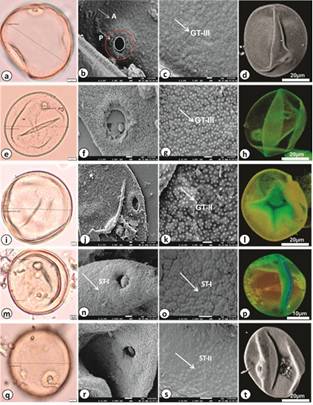
Fig 1:. Pollen micro-morphology of Non-cereal pollen
The study was led by Senior Scientist Dr. Swati Tripathi from BSIP, Lucknow, in collaboration with Dr. Arti Garg (Botanical Survey of India, Prayagraj); Arya Pandey and Anupam Sharma (BSIP); Priyanka Singh (Indian Institute of Geomagnetism, Mumbai); and Anshika Singh (Lucknow University).
This discovery will significantly enhance the accuracy of research on ancient agriculture, land use, and human impact on ecosystems. It will help archaeologists and environmental historians understand how humans gradually transformed the fertile plains of the Ganga into a major agricultural hub.
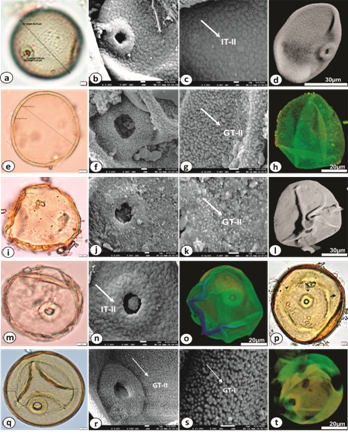
Fig. 2. Pollen micro-morphology of Cereal pollen
The study provides India with its first clear, region-specific scientific tool to trace the origins of agriculture and human settlement with much greater precision.
Publication link: https://doi.org/10.1177/09596836251414010.