 Indian Industry Plus A Pratisrutiplus Suppliment






The electric passenger vehicle in India is experiencing rapid growth, with total production expected to reach 1.33 million units approximately by 2030, accounting for 20% of total passenger vehicle production. Driven by high fuel costs, govt policies and improved infrastructure, electric passenger car sales are projected to see strong, continued expansion.
India’s market for passenger vehicle touched a new landmark in 2026 FY with double digit growth. It continues to be the third largest passenger vehicle market in the word. Incentive for electric vehicle and substantial cut in Goods and Sales Tax (GST) have collectively contributed to the accelerated growth in demand. Further, Sports Utility Vehicles (SUVs) continue to dominate the number sales (volume) converting consumer preferences to reality.
Among best-selling petrol cars of FY 26, Maruti Suzuki Swift and Maruti Suzuki Baleno leads the league with 1,54,993 units and 1,49,332 units respectively and with a market share of 6.3% and 6.1% respectively. While swift continues its dominance as people’s favourite hatchback, Baleno, positioning as premium one, ranked it in second position. The third and fourth position in volume sales is also occupied by Maruti Suzuki Fronx and Brezza with 4.8% (1.17 lakh units) and 4.4% (1.08 lakh units) market share respectively. Next in the market share ladder remain Hyundai Creta (4.2%), Tata Punch (4.0), Maruti Dzire (3.8%), Hyundai (3.8%) and Hyundai Venue (3.8%). The entry level mobility champion of India, Maruti Suzuki Alto gains a market share of 3.7% and continues to remain reliable in rural and semi-urban areas. In petrol driven car sales, SUVs and compact SUVs continues to hold the largest market share.
The Electric Vehicle (EV) market recorded nearly 85% increase in FY 26 on year-on-year basis with retail registrations totalling nearly 2.0 lakh units. The sales of mass-market EV sellers Mahindra and Kia increased by 5 times and 9 times respectively over previous year. Tata sold the highest quantity of EVs with nearly 79,000 units which is 36% more than its previous year sale. Tata enjoys 40% market share in EV market. EV models of Tata like Nexon, Punch and Harrier have strong demand in the market. The company has added two new EV models namely Sierra and Safari in FY 26. EV sales of Tata comprise of around 12% of company’s total passenger vehicles in 2026, which is much higher than the industry average.
Similarly, JSW MG Motor India has sold more than 53,000 units of EVs and retained second position in FY 26. In premium category, JSW has Windsor brand and its brands like Cyberster and M9 are growth drivers. JSW MG, a Chinese joint venture is driving hard to achieve 70% localisation within 18-24 months from the current level of 30-40% only. After meeting localisation target, it will seek government support under Production Linked Incentive (PLI) scheme. It has also planned for capacity expansion from current level of 1,20, 000 units to 3,00,000 units adding four new models by FY 28 with additional investment of Rs 4,000 crore.
Mahindra has sold 42,721 units of EVs having models namely BE6, XEV9e and XEV9S and its market share rose to 6.4%, which is five times as compared to 2015. Hyundai, BYD and KIA EVs recorded sales of 5885, 2390 and 1416 units and increased their market presence. Top six selling EVs of FY 2026 are Morris Windsor (46,720), Tata Nexon (29,197), Mahindra XEV 9E (27,336), Tata Harrier (17,590), Tata Punch (17,117), Mahindra BE 6 (16,313).
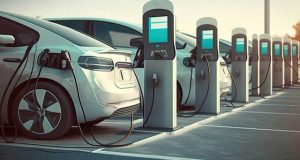
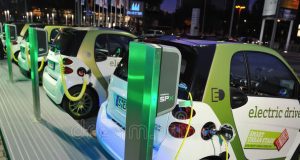
The electric passenger vehicle in India is experiencing rapid growth, with total production expected to reach 1.33 million units approximately by 2030, accounting for 20% of total passenger vehicle production. Driven by high fuel costs, govt policies and improved infrastructure, electric passenger car sales are projected to see strong, continued expansion. India aims for 30% electric vehicle penetration in a high growth market. Electric passenger vehicle penetration has reached nearly 5 percent by 2026 with major players like Tata Motors, JSW MG Motors and M & M leading the market. Rising fuel cost and air pollution are making EVs a cost-effective alternative. To support the sale, public charging stations increased fivefold between fiscal years 2022 to 2026 and is being continued.
The recent US-Iran war had a huge impact on uninterrupted supply of petroleum products to India. In view of this, Hon’ble Prime Minister has made a call to the nation to reduce the use of Diesel/petrol car and encouraged to purchase a greater number of EV cars. Following this, Odisha government has announced to extend the state subsidy (in addition to central subsidy) on purchase of EVs till 2028 FY. Other state governments will follow the path to encourage EVs instead of vehicles operating with petrol/diesel by extending subsidy support. Aggressive drive towards purchase and adoption of electric vehicles will reduce the financial burden of government on import of petroleum products and will reduce the carbon impact and air pollution.