Home » IT/ITES and ESDM » Data centre capacity in the country has increased from about 375 MW in 2020 to around 1500 MW by 2025

Data centre capacity in the country has increased from about 375 MW in 2020 to around 1500 MW by 2025

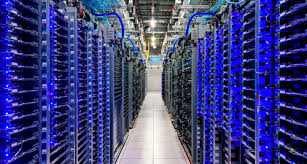
The data centre industry in India is growing steadily. The total data centre capacity in the country has increased from about 375 MW in 2020 to around 1500 MW by 2025.

To support AI development, about 38,231 GPUs have been onboarded through 14 empanelled service providers/data centres under the AI compute capacity framework.

These are being provided to startups, researchers, academia and other eligible users at a subsidised average rate of ₹65 per hour. This is about one-third of the global average cost.

These Data centres are located across the country such as Mumbai, Navi Mumbai, Hyderabad, Bengaluru, Noida and Jamnagar.

The government is cognisant of the infrastructure needs of the data centre ecosystem, including electricity and water.

The expected electricity demand from the growth of AI and other large-scale data centres is factored into the planning process of government. As per information available with the Ministry of Power, electricity demand from data centres is estimated to reach 13.56 GW by 2031–32.

India’s national transmission infrastructure is continuously being expanded to meet growing electricity demand. It is adequately prepared to ensure reliable power supply across regions.

Sustainable Harnessing and Advancement of Nuclear Energy for Transforming India (SHANTI) Act, was recently passed by Parliament to strengthen the nuclear energy ecosystem.

This act will ensure the development of reliable power solutions for emerging sectors such as AI and data centres by supporting future deployment of small modular and micro nuclear reactors.

The water requirement of data centres depends on the type of cooling technologies deployed. Regulation and control of groundwater extraction, including for industrial purposes, is governed by the guidelines issued by the Ministry of Jal Shakti vide notification S.O. 3289(E) dated 24.09.2020 and amendment notification dated 29.03.2023.

To minimise water usage, the industry is adopting advanced cooling technologies such as direct-to-chip liquid cooling, adiabatic cooling and immersion cooling.

Industry is also deploying high density racks to efficiently support high‑performance computing & AI workloads for further reduction of power and water consumption.

This information was submitted by Union Minister of State for Electronics and Information Technology Shri Jitin Prasada in Rajya Sabha


About IIPnews

x

Check Also

Budget 2026-27 announces the launch of India Semiconductor Mission (ISM) 2.0

Budget outlay towards Electronics Components Manufacturing Scheme (ECMS) to be increased to Rs. 40,000 Crores ...

Gandhinagar to host key Pre-Summit Event on Empowering India’s Digital Future with Policymakers and Industry Leaders

Strengthening India’s commitment to scaling responsible, inclusive, and innovation-led AI ecosystems across states, the IndiaAI ...

Highlights of Telecom Subscription Data as on 31st October 2025

Particulars Wireless* Wireline Total (Wireless+ Wireline) Broadband Subscribers (Million) 954.99 44.82 999.81 Urban Telephone Subscribers (Million) 647.82 ...

Department of Telecommunications Cautions Manufacturers, Importers and Resellers about Mandatory IMEI Registration and Consequences of IMEI Tampering

Telecommunication devices form the backbone of India’s digital economy. To secure telecom networks and prevent ...

Highlights of Telecom Subscription Data as on 30th September 2025

Particulars Wireless* Wireline Total (Wireless+ Wireline) Broadband Subscribers (Million) 951.23 44.40 995.63 Urban Telephone Subscribers (Million) 647.47 ...

Leading 6G Alliances and Research Institutions issue a Joint Statement reaffirming a shared commitment to shape the future of 6G as a global public good

At the International Bharat6G Symposium 2025, held alongside India Mobile Congress 2025, leading global research ...

PM to inaugurate 9th edition of the India Mobile Congress on 8th October

Prime Minister Shri Narendra Modi will inaugurate the 9th edition of the India Mobile Congress ...

Setting up of ‘NaMo Semiconductor Laboratory’ at IIT Bhubaneswar approved to help develop the talent pool for indigenous chip manufacturing & packaging abilities across Bharat

Union Minister of Electronics and Information Technology, Shri Ashwini Vaishnaw, has recently approved the setting ...

Union Minister Shri Ashwini Vaishnaw to launch NIELIT Digital University, a Platform designed to democratize access to high-quality digital education

Hon’ble Union Minister of Railways, Electronics and Information Technology and Information and Broadcasting Shri Ashwini ...

Semiconductor and ESDM Park in Collaboration with IIT Bhubaneswar: Prime Minister Lays the Foundation Stone

 Hon’ble Prime Minister Shri Narendra Modi has laid the foundation stone of the upcoming Semiconductor ...